🏗️ Introduction
Cement is one of the most important materials used in construction. From residential houses and commercial buildings to bridges, highways, dams, and tunnels, cement acts as the binding element that holds structures together.
When cement is mixed with sand, gravel, and water, it forms concrete — a strong and durable material capable of supporting heavy loads and large infrastructure.
Many people believe cement is a single product, but in reality, there are multiple types of cement, each designed for specific construction conditions.
Some types:
⚡ Gain strength quickly
🧱 Provide long-term durability
🌊 Resist chemicals or water damage
🔥 Control heat during large concrete pours
Choosing the right type of cement directly affects the strength, durability, and lifespan of a building.
In this guide, we explore 15 different types of cement used in construction and their practical uses.
🧪What Exactly is Cement?
Cement is a fine gray powder made primarily from:
🪨 Limestone
🏔️ Clay
⚙️ Other mineral materials
These raw materials are heated at extremely high temperatures in a kiln to form clinker, which is then ground into a fine powder.
When mixed with water:
💧 Cement forms a paste
🔗 The paste binds the aggregate together
🧱 The mixture hardens to form concrete
Concrete has become one of the strongest and most widely used construction materials in the world.
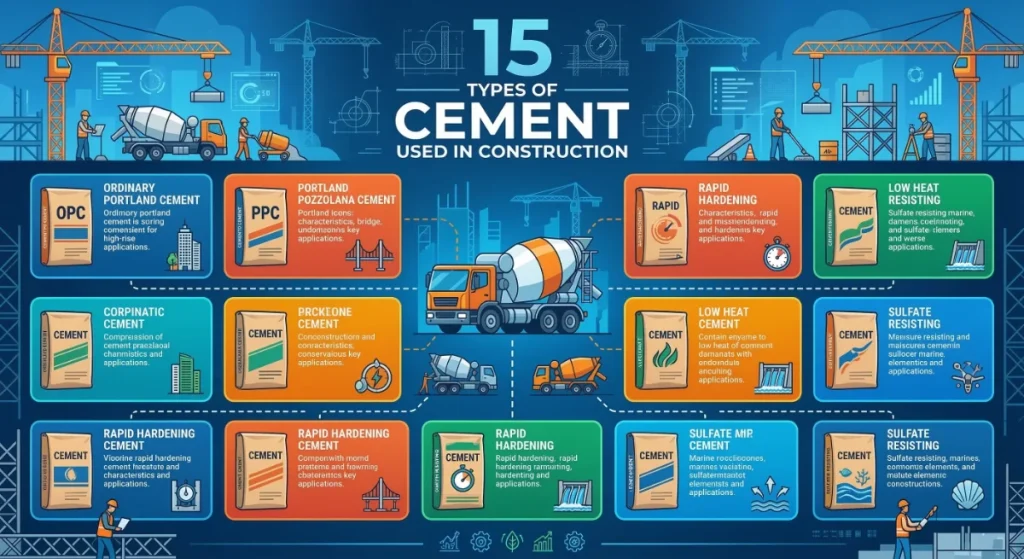
🏗️ 15 Types of Cement and Their Uses
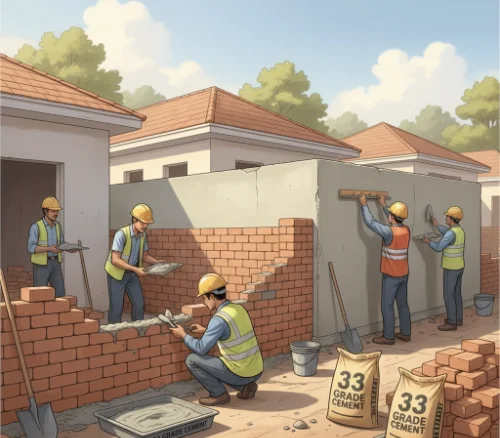
1️⃣ Ordinary Portland Cement (OPC)
OPC is the most widely used cement in construction. Made by grinding clinker with gypsum, it sets at a controlled rate and provides reliable compressive strength.
Uses: Residential construction, concrete roads, bridges, structural concrete work
🔹 Uses
- 🏠 Residential construction
- 🛣️ Concrete roads
- 🌉 Bridges
- 🏢 Structural concrete work
⭐ Benefits
- High compressive strength
- versatile
- widely available
2️⃣ Portland Pozzolana Cement (PPC)
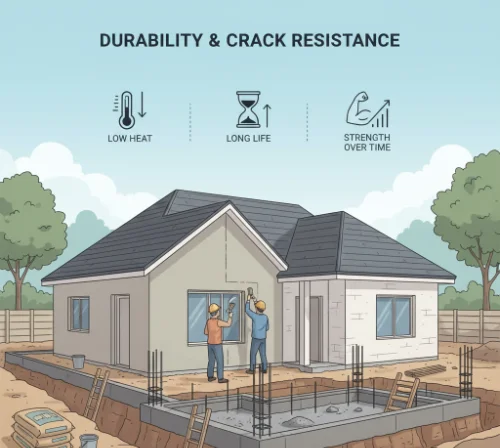
PPC is made by blending ordinary Portland cement with pozzolanic materials such as fly ash. This improves durability and chemical resistance.
🔹 Uses
- 🏠 Residential buildings
- 🏢 Commercial structures
- 🌊 Marine construction
- 🌉 Bridges and dams
⭐ Benefits
- Long-term strength
- Reduced heat generation
- improved durability
3️⃣ Rapid Hardening Cement
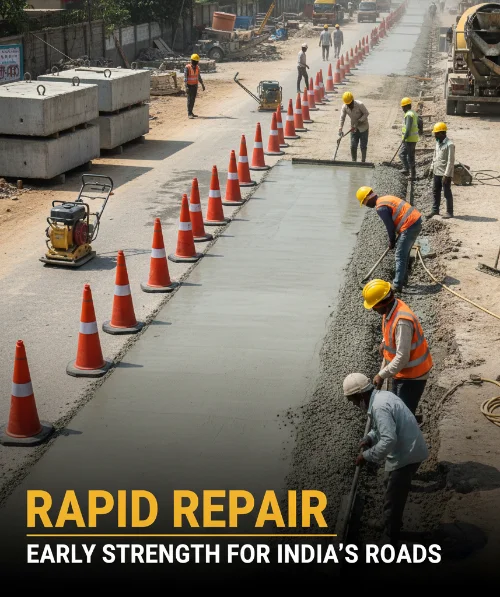
This cement gains strength faster than OPC, making it ideal for projects where speed is important.
🔹 Uses
- 🛣️ Road construction
- 🏗️ Precast concrete
- 🔧 Urgent repairs
⭐ Benefits
- Quick strength gain
- shorter construction times
4️⃣ Extra Rapid Hardening Cement
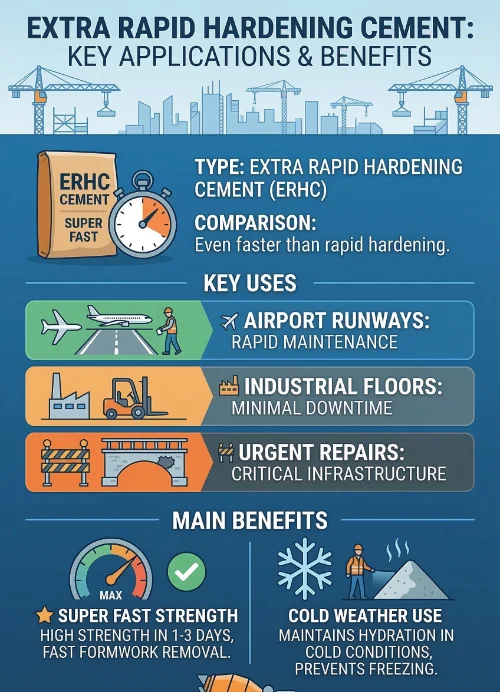
Similar to rapid hardening cement, but even faster due to added calcium chloride. Useful for projects needing early strength
🔹 Uses
- ✈ Airport runways
- 🏭 Industrial floors
- 🚧 Urgent repair works
⭐ Benefits
- Extremely quick strength development
- Useful in cold weather conditions
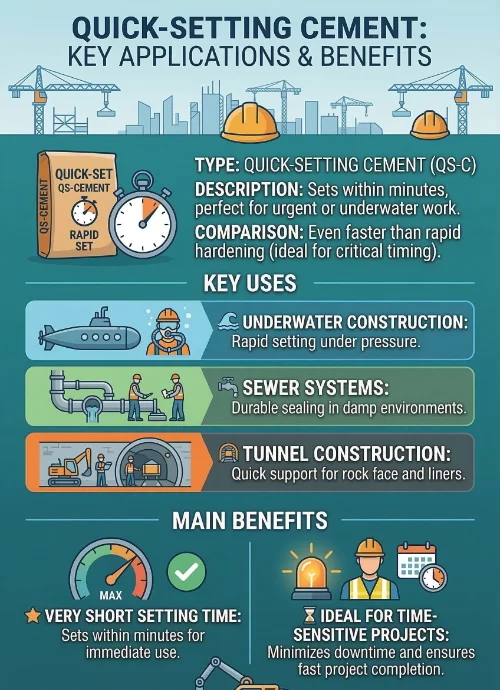
5️⃣ Quick-Setting Cement
Sets within minutes, making it perfect for urgent or underwater work.
🔹 Uses
- 🌊 Underwater construction
- 🚰 Sewer systems
- 🚇 Tunnel construction
- 🧰 Pipeline repairs
⭐ Benefits
- Very short setting time,
- ideal for time-sensitive projects
6️⃣ Low Heat Cement
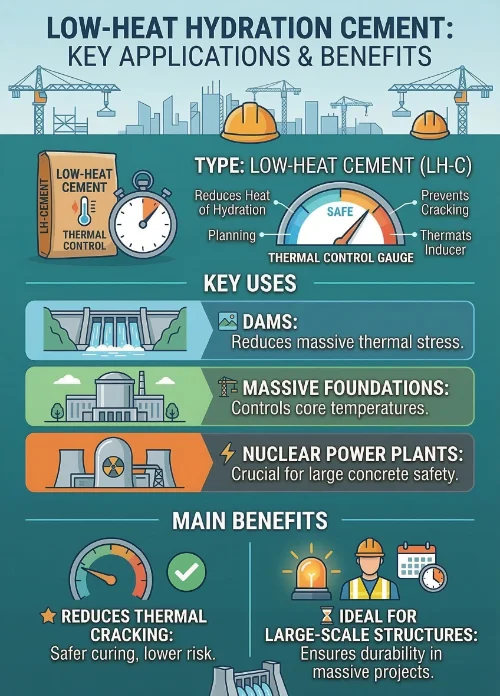
Designed to release less heat during hydration, reducing the risk of cracking in large concrete structures.
🔹 Uses
- 🏞️ Dams
- 🏗️ Massive foundations
- ⚡ Nuclear Power plants
⭐ Benefits
- Reduces thermal cracking
- ideal for large-scale structures
7️⃣ Sulphate Resisting Cement
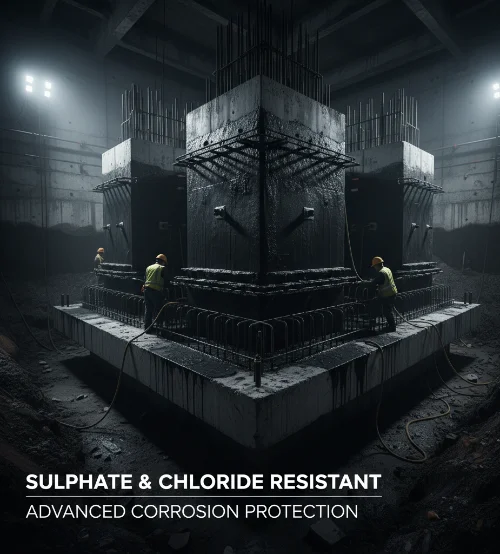
Protects structures from sulphate attacks in soil or groundwater, perfect for coastal or chemically aggressive environments.
🔹 Uses
- 🌊 Coastal construction
- 🏞️ Canal linings
- 🧱 Retaining walls
⭐ Benefits
- High chemical resistance
- improved durability
8️⃣ Blast Furnace Slag Cement
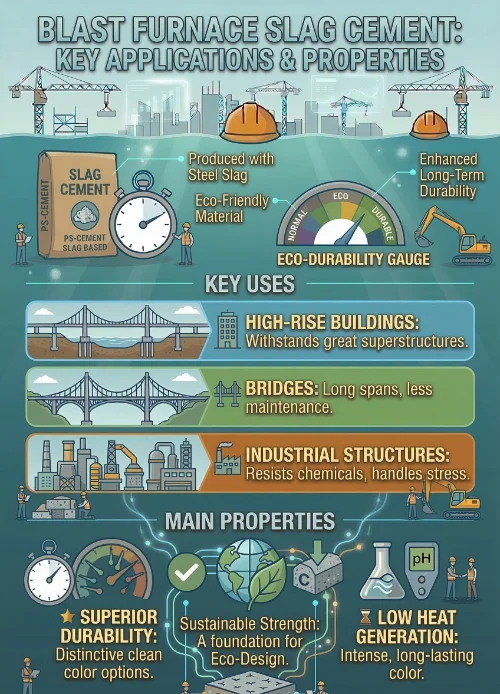
Produced using slag from steel manufacturing.
🔹 Uses
- 🏢 High-rise buildings
- 🌉 Bridges
- 🏭 Industrial structures
⭐ Benefits
- High durability
- Lower heat generation
- Eco-friendly
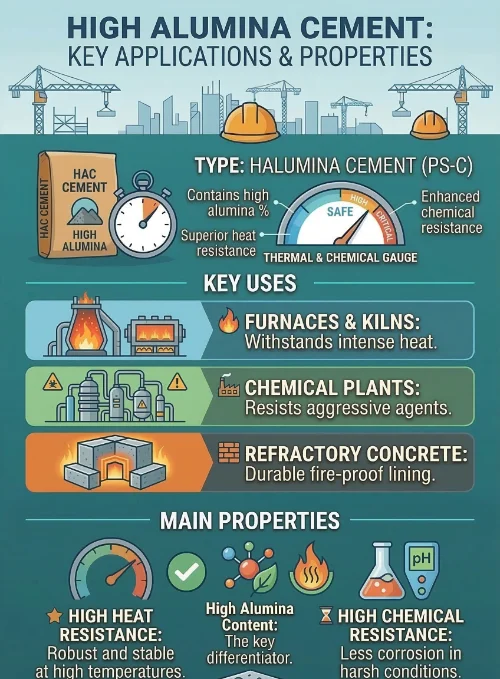
9️⃣ High Alumina Cement
Contains a high percentage of alumina, giving it heat and chemical resistance.
🔹 Uses
- 🔥 Furnaces, kilns
- 🏭 Chemical plants
- 🧱 Refractory concrete
⭐ Benefits
- High temperature resistance
- Chemical resistance
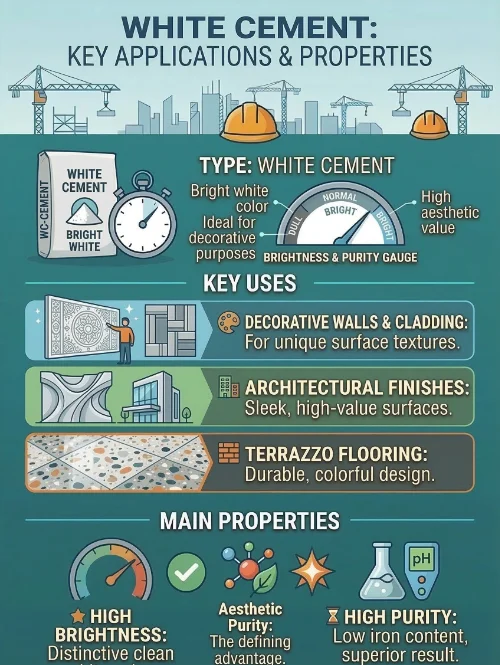
🔟 White Cement
Used mainly for decorative and architectural purposes due to its bright white colour.
🔹 Uses
- 🎨 Decorative walls, wall cladding
- 🏢 Architectural finishes
- 🧱 Terrazzo flooring
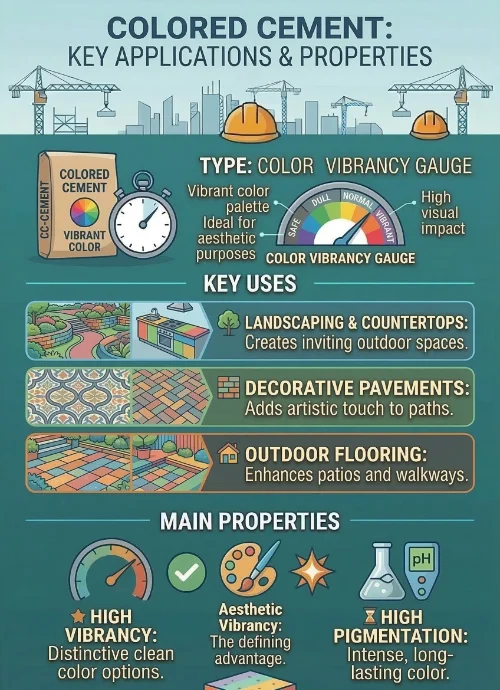
1️⃣1️⃣ Coloured Cement
Made by adding pigments to cement for aesthetic purposes.
🔹 Uses
- 🌳 Landscaping, countertops
- 🧱 Decorative pavements
- 🏡 Outdoor flooring
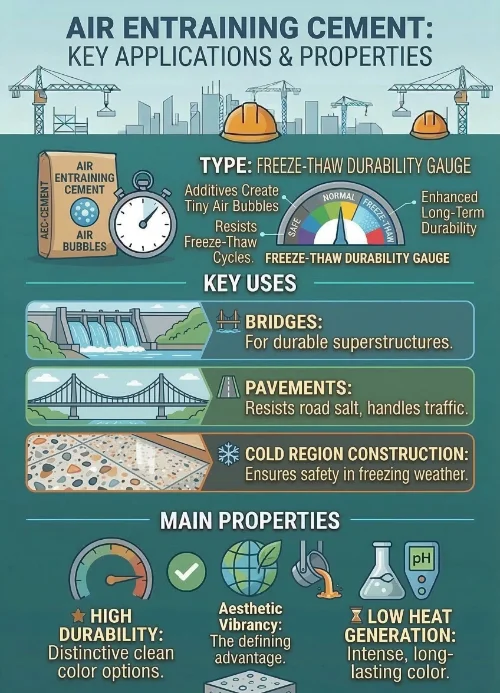
1️⃣2️⃣ Air Entraining Cement
It contains additives that create tiny air bubbles to resist freeze-thaw cycles.
🔹 Uses
- 🌉 Bridges
- 🛣️ Pavements
- ❄ Cold region construction
⭐ Benefits
- Better freeze-thaw resistance
- Improved workability
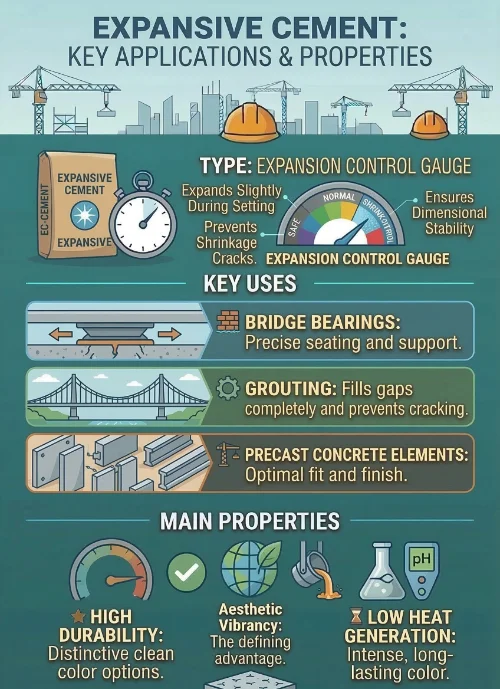
1️⃣3️⃣ Expansive Cement
Expands slightly during setting, preventing shrinkage cracks.
🔹 Uses
- 🧱 Bridge bearings
- ⚙️ Grouting
- 🏗️ Precast concrete elements
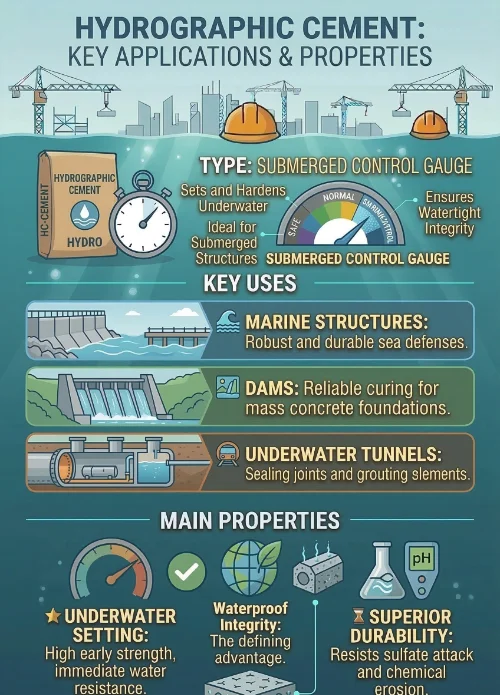
1️⃣4️⃣ Hydrographic Cement
Sets and hardens underwater, ideal for submerged structures.
🔹 Uses
- 🌊 Marine structures
- 🏞️ Dams
- 🚇 Underwater tunnels
- 🚰 Water tanks
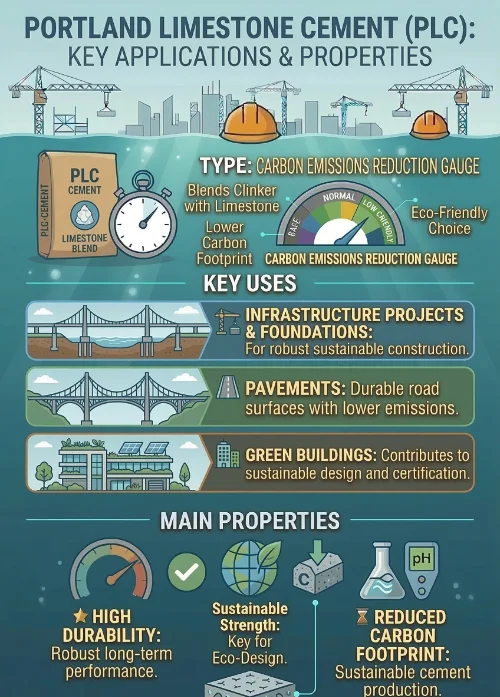
1️⃣5️⃣ Portland Limestone Cement (PLC)
Blends clinker with limestone, reducing carbon emissions and making it more eco-friendly.
🔹 Uses
- 🏗️ Infrastructure projects, Foundations
- 🛣️ Pavements
- 🏢 Green buildings
⭐ Benefits
- Environmentally friendly
- Reduced carbon footprint
- Sustainable construction
| Feature | Ordinary Portland Cement (OPC) | Portland Pozzolana Cement (PPC) |
| Composition | Clinker (95%) + Gypsum (5%) | OPC Clinker + Gypsum + Pozzolanic materials (Fly Ash) |
| Initial Strength | High (Develops strength quickly) | Low (Gains strength slowly but steadily) |
| Durability | Standard | High (Better resistance to chemicals & moisture) |
| Heat of Hydration | High (More prone to thermal cracks) | Low (Reduces risk of cracking in large slabs) |
| Curing Period | Shorter (Approx. 7–10 days) | Longer (Approx. 10–14 days) |
| Best For… | High-rise buildings, bridges, and fast-track projects. | Residential homes, plastering, and masonry work. |
| Cost | Slightly more expensive | More cost-effective and eco-friendly |
❓ Frequently Asked Questions (FAQs)
1. Which cement is best for house construction?
🏠 OPC and PPC are widely used. PPC is preferred for durability and reduced cracking.
2. What is the difference between OPC and PPC?
🌊 OPC sets faster and provides early strength. PPC contains pozzolanic materials for better long-term durability.
3. Which cement is suitable for underwater construction?
🏞️ Quick Setting Cement and Hydrographic Cement are ideal for underwater projects.
4. Which cement is used in dams?
🌅 Low Heat Cement is preferred for large dams to prevent thermal cracking.
5. Why is white cement used?
🌊White cement is mainly for decorative and architectural purposes due to its bright color.
6. What cement is best for coastal areas?
⚡Sulphate Resisting Cement protects structures from sulphate-rich soils and seawater.
7. How do engineers choose the right cement?
⭐They consider structure type, load, environmental conditions, setting time, and durability requirements.
🏁Conclusion
Cement is the backbone of modern construction, and choosing the right type is crucial for durability, strength, and safety. While OPC and PPC are ideal for most projects, specialized cements like Low Heat Cement, Sulphate Resisting Cement, or Rapid Hardening Cement are essential for specific conditions.
By understanding the different types of cement and their applications, builders and engineers can make informed choices, ensuring structures last longer and perform better under different conditions.
Final Thoughts: By Consyard Homes (Best Construction Company – Gurgaon / Gurugram)
Selecting cement should never be based on price alone. The right cement depends on:
- Type of structure
- Load requirements
- Environmental conditions
- Construction speed
- Long-term durability expectations

Choosing wisely at this stage ensures stronger structures, fewer repairs, and a longer lifespan for your building.
Still unsure which grade is right for your plot?
Consult with an expert before you mix. Your future self will thank you for the extra research today.
Get Free Expert Advice